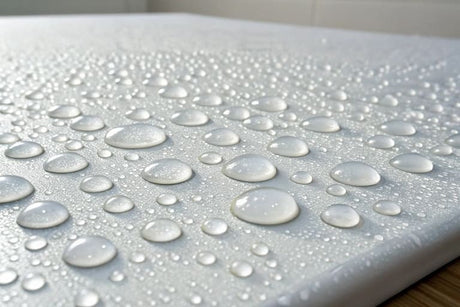
Anyone who takes pride in their vehicle knows the frustration of washing a car only to find water spots ruining that perfect finish once it dries. The culprit? The water you're using.
Yes, deionized water is significantly better than soft or filtered water for car washing because it contains zero mineral content (0 TDS), which eliminates water spots completely and allows for air drying without toweling. Unlike soft water, which merely exchanges minerals rather than removing them, deionized water provides a truly spot-free finish that's especially valuable for dark-colored vehicles.
After spending over 15 years in water treatment systems and developing our Zealous Garage line of portable deionizers, I've seen firsthand how the right water can transform the car washing experience. Let's explore why deionized water stands above other options and how to use it effectively.
Table of Contents
- What Makes Water Leave Spots on Cars After Washing?
- How Do Different Water Types Compare for Car Washing?
- What Makes Deionized Water Superior for Car Washing?
- What Are the Different Deionization Systems Available?
- Should You Use Deionized Water for the Entire Wash Process?
What Makes Water Leave Spots on Cars After Washing?

Water spots on vehicles are primarily caused by the Total Dissolved Solids (TDS) in your water, not just water hardness. When water evaporates from your car's surface, any minerals dissolved in that water remain behind as visible spots or streaks.
Total Dissolved Solids (TDS) as the Primary Culprit
TDS is the comprehensive measurement of all dissolved substances in water, including minerals, salts, metals, and ions. The higher your water's TDS reading, the more residue will be left behind after evaporation.
"Total mineral content, referred to in water treatment as TDS, or 'Total Dissolved Solids,' is the real predictor of water's spotting potential. The higher the TDS, the more spotting you'll experience." - Pure Water Products LLC
A TDS meter measures these dissolved solids in parts per million (ppm). For reference, here's how different water types typically measure up:
| Water Type | Typical TDS Range (ppm) | Spotting Potential |
|---|---|---|
| Tap Water | 150-400+ | High |
| Softened Water | 150-400+ | Medium-High |
| Carbon Filtered | 150-400+ | Medium-High |
| Reverse Osmosis | 5-50 | Low |
| Deionized Water | 0-5 | None |
Difference Between Hardness and Total Mineral Content
Many car owners mistakenly focus only on water hardness, but this is just one component of TDS. Water hardness specifically refers to calcium and magnesium content, while TDS includes these plus sodium, potassium, chlorides, sulfates, and many other dissolved minerals.
According to a discussion on AutoGeek Online:
"Soft water still contains minerals. However, different minerals are exchanged; calcium and magnesium (high spotting) for sodium or potassium (spotting should be less). Deionized water has all minerals extracted. As a result, there should be no spots."
This distinction explains why water softeners alone don't completely solve the spotting problem.
How Water Spots Form During Evaporation
The formation of water spots follows a simple process:
- Water droplets sit on your vehicle's surface
- As the water evaporates, dissolved minerals become more concentrated
- When fully evaporated, minerals are left behind as visible spots
- The higher the mineral content, the more noticeable the spots
In my testing at Zealous Garage, I've observed that spots form more quickly and severely in hot, sunny conditions – precisely when most people wash their cars.
The Impact of Mineral Residue on Vehicle Surfaces
Beyond the immediate cosmetic issue, mineral deposits can cause long-term damage to your vehicle:
| Type of Damage | Description | Prevention Method |
|---|---|---|
| Etching | Acidic minerals can permanently damage clear coat | Use 0 TDS deionized water |
| Bonding | Minerals bond with wax/coating, reducing protection | Rinse with deionized water |
| Dulling | Repeated mineral deposits create a hazy appearance | Avoid mineral-rich water |
| Paint Degradation | Long-term exposure weakens paint protection | Use spot-free water systems |
How Do Different Water Types Compare for Car Washing?

Deionized water is superior to tap, softened, and filtered water for car washing because it's the only option that truly removes all minerals rather than just exchanging or partially filtering them. Let's compare each water type to understand why.
Tap Water: High Mineral Content and Spotting Potential
Unfiltered tap water is the most problematic option for car washing. Depending on your location, tap water can contain:
- Calcium and magnesium (hardness minerals)
- Sodium and potassium
- Iron and manganese
- Chlorine and chloramines
- Various other minerals and contaminants
One Reddit user from r/AutoDetailing noted:
"I moved to NE Florida. The water from my house was terrible, even though it came with a water softener already installed... Still had bad water spots. I was kind of upset for wasting about $100 on this filter and it didn't remove spots like it clearly stated in the description."
In my experience developing water systems, municipal water TDS readings typically range from 150-400+ ppm, though some areas can exceed 1000 ppm. At these levels, spotting is virtually guaranteed.
Softened Water: Exchanging Minerals, Not Removing Them
Many car enthusiasts mistakenly believe water softeners will solve their spotting problems. However, softeners work by ion exchange – replacing calcium and magnesium ions with sodium ions – rather than removing minerals entirely.
| Water Type | How It Works | TDS Impact | Spotting Result |
|---|---|---|---|
| Tap Water | Untreated | High TDS | Heavy spotting |
| Softened Water | Ion exchange (Ca/Mg → Na) | Similar TDS | Reduced but still visible spotting |
| Deionized Water | Complete mineral removal | 0 TDS | No spotting |
As explained by an expert on CarWashForum:
"Soft water still contains minerals. The softener doesn't remove minerals. The CR [Spotless] is a demineralizer not a water softener. Minerals left behind when water evaporates are what leave spots, so you need pure water (no minerals) to ensure no water spots."
Filtered Water: Partial Contaminant Removal
Standard carbon filters and similar filtration systems can improve water by removing chlorine, sediment, and some contaminants, but they do little to address TDS levels.
Even advanced multi-stage filters typically leave most dissolved minerals intact:
- Carbon filters: Remove chlorine, improve taste, minimal TDS reduction
- Sediment filters: Remove particles, no TDS reduction
- KDF filters: Address heavy metals, minimal TDS reduction
Deionized Water: Complete Mineral Removal Process
Deionization is fundamentally different from other water treatment methods because it targets ions specifically. Through an ion exchange process using specialized resins, deionization removes virtually all mineral content:
- Cation resins remove positively charged ions (calcium, magnesium, sodium)
- Anion resins remove negatively charged ions (chloride, sulfate, nitrate)
- In mixed-bed systems, both processes occur simultaneously
The result is water with 0-5 ppm TDS – essentially pure H₂O – that evaporates without leaving any trace of spots.
What Makes Deionized Water Superior for Car Washing?

Deionized water provides superior car washing results because it eliminates water spots completely, removes the need for towel drying, allows washing in direct sunlight, and actually helps lift dirt from surfaces through a magnetic effect. These benefits make it particularly valuable for dark-colored vehicles and enthusiasts seeking perfect finishes.
Zero TDS Measurement and Spotless Results
The most obvious advantage of deionized water is its complete lack of dissolved solids. When measured with a TDS meter, properly deionized water will read 0 ppm, meaning there are literally no minerals to leave behind when the water evaporates.
In our Zealous Garage product testing, we've consistently found that water with TDS readings below 10 ppm generally produces spot-free results, with 0 ppm being ideal. This is particularly important for dark-colored vehicles where even minor spotting is highly visible.
One car enthusiast on FocusST.org shared their experience:
"Love my DI set up, hooks up to the outside spigot and the hose attaches to the output of the second (white) tank. I barely use towels at all anymore as the water doesn't leave spots."
This table illustrates the relationship between TDS levels and spotting on different vehicle colors:
| TDS Level (ppm) | Black/Dark Vehicle | Medium Color Vehicle | Light/White Vehicle |
|---|---|---|---|
| 0-10 | No visible spots | No visible spots | No visible spots |
| 10-25 | Minimal spotting | No visible spots | No visible spots |
| 25-50 | Visible spotting | Minimal spotting | Barely visible |
| 50-100 | Significant spotting | Visible spotting | Minimal spotting |
| 100+ | Severe spotting | Significant spotting | Visible spotting |
Elimination of Towel Drying Requirements
Perhaps the most practical benefit of using deionized water is eliminating the need to hand-dry your vehicle. This saves time and reduces the risk of introducing swirls and scratches from towel contact.
"When you previously let the truck air-dry, and found some streaks and spots, it is because there was shampoo residue in the trim, mirrors, door handles, etc, and when these drips dried, the shampoo residue was left behind." - Adams Forums user
With our Zealous Garage portable deionizer, customers report simply rinsing their vehicles and walking away, returning to a perfectly spot-free finish. This is particularly valuable for vehicles with complex surfaces like wheels, grilles, and trim pieces that are difficult to dry thoroughly with towels.
Ability to Wash in Direct Sunlight
Traditional car washing wisdom warns against washing in direct sunlight because water spots form quickly as the vehicle surface heats up. With deionized water, this limitation disappears.
One detailer on DetailingWorld.co.uk noted:
"I only use DI-ionized water for rinsing when it's sunny or when I give the car a quick wash and I don't have time to dry it or when I know it will rain later in the day, seems a waste of time drying the car when rain is due so I best rinse it and leave it."
This flexibility is especially valuable for mobile detailers and enthusiasts with limited shade options. With our Zealous Garage systems, we've successfully demonstrated spot-free results even in 90°F+ direct sunlight conditions.
Magnetic Effect on Dirt and Contaminants
A lesser-known but significant benefit of deionized water is its enhanced cleaning ability. Because deionized water lacks minerals, it becomes naturally "hungry" for ions, creating a magnetic-like effect that helps lift dirt and contaminants from surfaces.
As explained on SpotlessWaterSystem.blogspot:
"The reason why deionized water is considered the best for cleaning is that it acts as a magnet for dirt and contaminants. It absorbs the grime and dust from the surface leaving a sparkling shine."
This property makes deionized water particularly effective for maintenance washes and rinsing, often reducing the need for aggressive soaps or detergents.
What Are the Different Deionization Systems Available?

Deionization systems for car washing range from small portable units to large professional setups, with differences in capacity, resin type, and cost. Understanding these options helps you choose the right system for your specific needs.
Portable DI Systems for Home Use
Portable deionizers are the most popular option for home car washing enthusiasts. These compact systems typically connect directly to a garden hose and produce spot-free water on demand.
At Zealous Garage, our portable deionizer line includes:
- Stage I: Compact single-tank system
- Stage II: Mid-size system with improved flow rate
Actual capacity varies significantly based on your source water's TDS level. For example, a user with 150 ppm tap water will get roughly twice the capacity of someone with 300 ppm water.
According to a user on CarWashForum:
"I recently purchased a water deionizer system for rinsing my vehicles after washing, and I'm so glad I did! It's been a game-changer for my car wash routine. I used to have to spend a lot of time drying my car after washing it to prevent water spots, but now I just let the water air dry and it's spotless."
Two-Stage vs. Single-Stage Deionizers
Deionization systems typically come in single-stage or two-stage configurations:
| System Type | Description | Advantages | Best For |
|---|---|---|---|
| Single-Stage | Uses mixed-bed resin in one canister | Compact, lower cost, simpler | Occasional use |
| Two-Stage | Separate cation and anion stages | Higher capacity | Frequent use |
For most home users with moderate TDS levels (under 300 ppm), a single-stage system like our Zealous Garage Stage I Deionizer provides excellent results. However, those with particularly hard water or high TDS readings may benefit from our ZG Stage II larger capacity deionizer system.
Resin Life and Replacement Considerations
The resin inside deionizers is what does the actual work of removing minerals, and it has a finite capacity. Once exhausted, the resin must be replaced.
Factors affecting resin life include:
- Source water TDS (higher TDS = faster depletion)
- Volume of water processed
- Flow rate (slower flow = more efficient ion exchange)
- Resin quality and quantity
One user on AutoGeekonline shared:
"I've been using a double mixed bed dionizer from On the Go for 3 years. I have never replaced the resin. It registered 0 ppm when I first got it and now it is registering 33 ppm. I bought it to use in my radiator for flushing. What I actually use it for is washing and spot free rinsing. Never have to dry my metallic silver Jeep again."
Our Zealous Garage systems are designed to optimize the cost-per-gallon with high-capacity resin and efficient design. For most home users washing 1-2 vehicles weekly, a quality portable system typically costs less than commercial car washes over a one-year period.
Should You Use Deionized Water for the Entire Wash Process?

For most users, it's most economical to use deionized water strategically for the final rinse rather than the entire wash process. This approach maximizes resin life while still achieving spot-free results.
Strategic Use for Final Rinse Only
The most cost-effective approach is to use regular water for the initial rinse and washing stages, then switch to deionized water for the final rinse. This strategy preserves your deionization resin while still achieving spot-free results.
As an AutoGeekonline member advised:
"That's what I would do as it will extend the life of the resin cartridge."
At Zealous Garage, our deionizers come with the Clack bypass valve that allows you to switch between tap water and deionized water. Our modular vented flooring system also help manage water runoff during the washing process, creating a more efficient washing station.
Benefits for Chemical Dilution and Preparation
While not necessary for the washing process itself, deionized water offers significant benefits when preparing cleaning solutions:
- Eliminates mineral interactions with soaps and chemicals
- Improves effectiveness of glass cleaners
- Prevents spotting when mixing spray detailers or quick detailers
One detailer noted:
"We normally only use DI water for the final rinse or also for water to mix with chemicals. Our Meguiar's Glass cleaner seems to work drastically better when mixed with DI water vs tap water."
This is particularly relevant for professional detailers who need consistent chemical performance regardless of local water quality.
Extending Resin Life Through Selective Application
The resin in deionization systems has a finite capacity based on the total amount of minerals it can remove. By using deionized water selectively, you can significantly extend resin life.
Consider these approximate usage figures for a vehicle with a Zealous Garage deionizer system:
| Wash Stage | Water Usage | DI Water Usage with Strategic Approach | Resin Life Extension |
|---|---|---|---|
| Pre-rinse | 15-20 gallons | 0 gallons (use regular water) | 35-40% longer |
| Soap application | 5-10 gallons | 0 gallons (use regular water) | 15-20% longer |
| Wheel cleaning | 5-10 gallons | 0 gallons (use regular water) | 15-20% longer |
| Final rinse | 10-15 gallons | 10-15 gallons (use DI water) | No change |
| Total | 35-55 gallons | 10-15 gallons | 50-75% longer |
By using deionized water only for the final rinse, you can typically extend resin life by 50-75%, significantly reducing operating costs.
Combining with Other Water Types for Efficiency
For maximum efficiency, many enthusiasts combine multiple water treatment methods:
- Pre-filtration: Basic sediment and carbon filtration to remove particulates and chlorine
- Water softening: Optional step to reduce hardness minerals
- Deionization: Final step for the rinse water only
According to a water treatment engineer on FocusST.org:
"I am an engineer in water treatment. DI water wouldn't be an issue for car wash at all. RO would be just as good. But higher water consumption... For the purposes of what you are doing and how frequently, don't use soft water feed into a DI system just run hard water. No need to waste the extra salt on using soft water if you are using DI after."
At Zealous Garage, our testing confirms that while pre-filtering can extend resin life, the most economical approach for most home users is simply to use untreated water for washing and deionized water for the final rinse.
Final Thoughts
After years of working with water treatment systems and helping customers achieve perfect finishes, I can confidently say that deionized water represents the gold standard for car washing. The ability to simply rinse and walk away—even in direct sunlight—without fear of water spots transforms the entire car care experience.
For most enthusiasts, a quality portable deionizer used strategically for the final rinse offers the perfect balance of performance and economy. Our Zealous Garage deionizers are specifically engineered for this application, with premium resin formulations and durable construction designed to deliver consistent results.
Whether you're a weekend enthusiast with a prized vehicle or a professional detailer seeking to elevate your service offerings, incorporating deionized water into your washing routine is one of the most impactful upgrades you can make.
References
Pure Water Products - Does "Soft" Water Assure a Spot-Free Car Wash?
AutoGeekOnline - Water softener vs CR Spotless confusion
FocusST.org - Soft Water and Deionization
CarWashForum - Anyone using Water Deionizer Systems? Insights Please!
NEWater - What is Deionized Water and Soft Water?
Detailing World - Is deionised water OK for rinse rather than drying
ProAqua Water - What's The Best Type of Water for Auto Detailing
AutoGeekOnline - How to best use deionized water?
Adams Forums - Question on washing procedure with deionized water
Portable Water Softener - What is the difference between a water softener and deionizer